
Why Does My Knee Hurt? How Pilates & Fascial Counterstrain Can Help

Knee pain can be frustrating, especially when you can’t pinpoint exactly why it started.
Maybe your knee aches when you go up and down stairs. Maybe it feels stiff after sitting for a while. You might notice swelling after a long walk, discomfort during exercise, or simply feel like something isn’t moving quite right.
And while the pain is showing up at your knee, the knee itself may not be the whole problem.
At Performance Pilates in Sugar Land, Texas, we look beyond the painful area to understand how your entire body is moving and what may be placing unnecessary stress on the knee.
What Causes Knee Pain?
The knee sits between two highly influential areas of the body: the hip and the foot.
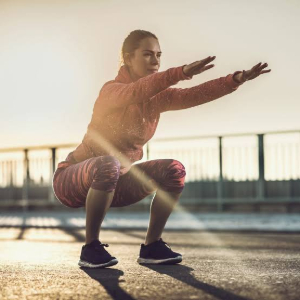
Ideally, forces from walking, climbing stairs, exercising, and everyday movement are distributed throughout the body. But when the foot, ankle, hip, pelvis, or even the spine isn’t moving efficiently, the knee may be asked to absorb more force than it should.
Limited ankle mobility can change the way you walk or squat. Poor hip mobility or stability can affect how the leg moves and loads. Tension through the pelvis and surrounding fascial structures can also influence how force travels through the leg.
Your body is connected through an extensive fascial network, so we don’t think of the knee as an isolated joint. We look at it as part of an interconnected movement system.
The goal isn’t simply to make your knee stronger. It’s to help your whole body share the work.
Why Does My Knee Swell?
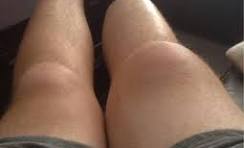
Swelling is your body’s response to irritation, inflammation, or injury.
Sometimes the cause is obvious, such as a fall or twist. Other times, swelling develops gradually and may accompany arthritis, repetitive stress, altered movement mechanics, or irritation within or around the joint.
Swelling can also change the way you move. You may begin protecting the knee by walking differently, avoiding certain movements, or shifting more weight to the opposite side, which can create additional compensation elsewhere.
Persistent, unexplained, significant, or sudden knee swelling should be evaluated by an appropriate healthcare professional to determine its cause. Once serious injury or medical concerns have been addressed, improving the way your body moves can become an important part of moving forward.
How Pilates Can Help With Knee Pain
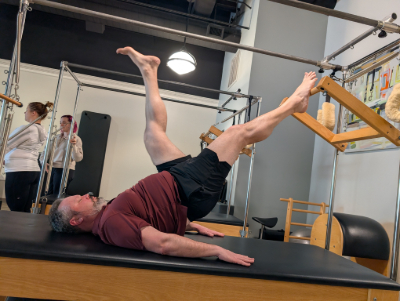
Classical Pilates is a whole-body movement system designed to improve strength, mobility, coordination, balance, and control.
At Performance Pilates, we combine Classical Pilates with a fascial movement approach. Instead of focusing only on strengthening the muscles surrounding the knee, we look at how your entire body organizes and distributes movement.
Depending on what your body needs, Pilates may help improve hip and ankle mobility, strengthen the legs and hips, improve balance and stability, and create more efficient movement patterns.
The Pilates equipment…Reformer, Cadillac, Chair, Barrels, and Mat…also allows us to support or challenge movement appropriately for the individual.
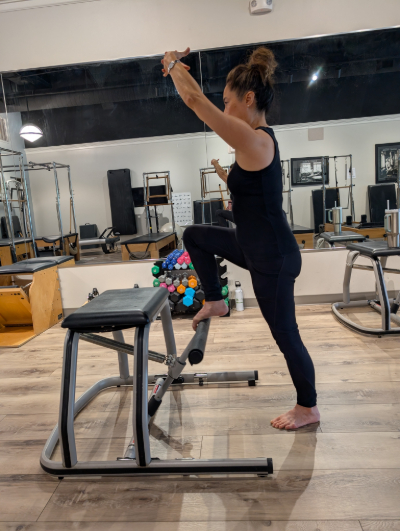
You don’t have to wait until your knee feels “perfect” to begin moving.
You need to find the right movement for your body.
How Can Fascial Counterstrain Help Knee Pain and Swelling?
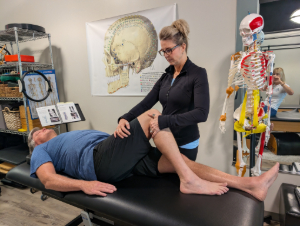
Sometimes movement is only part of the picture.
Fascial Counterstrain is a gentle, passive manual therapy designed to identify and release areas of fascial dysfunction and trapped inflammation throughout the body.
Because the fascial system is interconnected, the restriction contributing to knee pain or swelling may not necessarily be located at the knee itself. Fascial Counterstrain allows us to assess the body more globally and address areas that may be contributing to pain, stiffness, swelling, or limited mobility.
For some clients, reducing restriction first can make movement easier. Pilates can then help the body strengthen and learn to use that new movement more efficiently.
Counterstrain can help create change. Pilates can help you use that change.
Instead of Asking, “What’s Wrong With My Knee?”
Try asking:
Why is my knee having to work this hard?
Pain tells us where you’re feeling the problem, but it doesn’t always tell us why it’s happening.
Looking at the bigger movement picture can help us identify where you’re restricted, where you’re compensating, and how we can get more of your body participating in movement.
That is where Pilates becomes much more than exercise.
Pilates for Knee Pain in Sugar Land, Texas
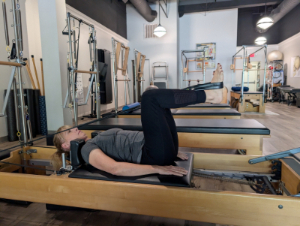
If knee pain, stiffness, or limited mobility is keeping you from walking, exercising, traveling, playing a sport, or simply doing the things you enjoy, we’d love to help you find a better way to move.
At Performance Pilates in Sugar Land, Texas, we combine Classical Pilates, fascial movement principles, and Fascial Counterstrain to help you move with greater ease, strength, balance, and confidence.
Ready to Move With More Ease?
Start with our Move Smarter Intro: 3 private Pilates sessions for $285.
We’ll look at how your whole body moves, introduce you to our fascial approach to Pilates, and help determine the best way to move forward.
Contact Performance Pilates in Sugar Land at 281-937-7761 to get started.