
Why “Core Strength” Is Not What You Think It Is
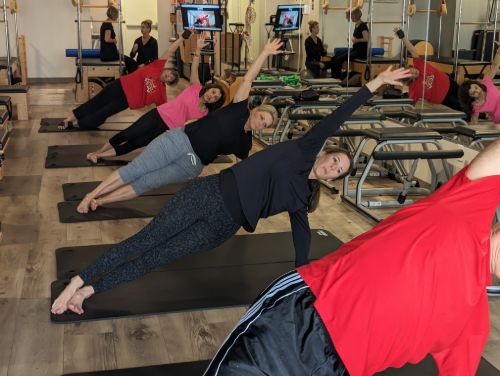
When most people hear core strength, they think crunches, planks, or flat abs. At Performance Pilates in Sugar Land, we see core strength differently, and that difference changes how your body moves, feels, and functions.
True core strength isn’t about bracing or gripping. It’s about supporting your body through movement, breath, and balance.
Your Core Is a System
Your core includes your diaphragm, pelvic floor, deep abdominals, spine, hips, and glutes. These muscles work together to create stability with mobility, so you’re strong without being stiff.
When this system is trained properly, movement feels lighter, more controlled, and pain-free.
Stop Bracing Your Core: Why Real Stability Comes From Elastic Support, Not Tension
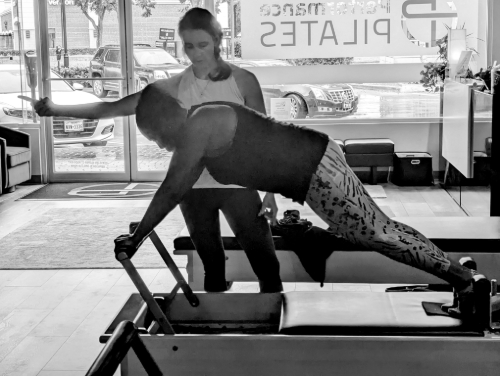
For years, we’ve been told to “tighten” or “brace” our core to protect our spine. While this advice is well-intentioned, constantly holding tension in your abdominal muscles often does the opposite of what your body needs.
Chronic bracing restricts breathing, stiffens the rib cage, dehydrates fascia, and reduces the natural wave-like movement of the spine. Instead of creating strength, it trains rigidity.
Your Core Is Not a Corset.
Real core strength isn’t something you hold. It’s something that responds.
Real Core Support Is Automatic
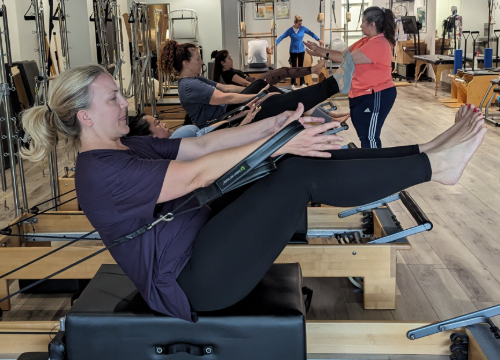
Your nervous system already knows how to stabilize you.
True core function is anticipatory and reflexive:
It turns on just enough, just in time, and turns off again when it’s no longer needed.
That’s what allows:
- Freedom of movement
- Better balance
- Less pain
- More power
- Less wear and tear on joints and discs
In a healthy system, the deep core activates automatically when support is needed and just as importantly, it softens again when it’s not. This on-off timing is what makes your body efficient, resilient, and ready for the next movement.
This is how your body is designed under biotensegrity:
Stability comes from balanced tension across the whole fascial web, not from clamping down in one area.
When you over-brace your abs, you interrupt this global support system. You create a stiff “compression strategy” instead of elastic, whole-body support.
Fascia, Breath, and the Loss of Spinal Wave
Fascia thrives on movement, oscillation, and pressure changes from breathing. When you hold your core tight:
- The diaphragm can’t descend fully
- The rib cage can’t expand and recoil
- The deep front line loses elasticity
- The spine loses its natural wave motion
Over time, this creates a body that feels “tight,” “compressed,” and surprisingly… less stable.
Pilates trains the core to work with your breath and movement, not against them.
Why Pilates Works
Pilates doesn’t isolate muscles, it integrates them. The result?
- Better posture and balance
- Stronger, more supportive movement
- Strength that carries over into daily life
- STRONGER ABS: Your abs get stronger too, but as a result of better movement, not punishment.
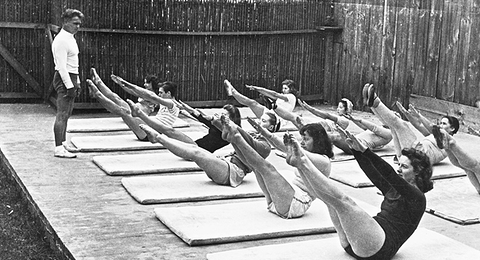
Ready to Feel the Difference?
Experience what real core strength feels like with a personalized Pilates session.
Book your consultation at Performance Pilates in Sugar Land today and start moving smarter, stronger, and with more ease.
Performance Pilates, Sugar Land Town Square, 281-937-7761