
The Legacy of Joseph Pilates: Why History Matters, Especially for Fascia-Based Movement
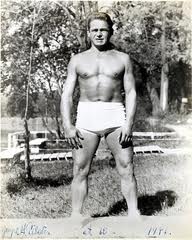
When you step into a Pilates studio today, you’re not just joining a class—you’re stepping into a living legacy of movement, innovation, and healing.
At our studio, we teach Pilates through a fascia-focused lens, blending modern science with the timeless wisdom of Joseph Pilates. Understanding his history deepens every movement and honors the roots of this remarkable method.
From Frail Beginnings to a Visionary in Movement
Joseph Hubertus Pilates was born in Germany in 1883. As a child, he suffered from asthma, rickets, and rheumatic fever. These challenges drove his lifelong study of anatomy, gymnastics, yoga, martial arts, and animal movement.
He created his method to build strength, balance, and resilience through mindful control of the body and breath. In his own words, “Physical fitness is the first requisite of happiness.”
Through this philosophy, he developed what he called Contrology, “the complete coordination of body, mind, and spirit”. – Joseph Pilates
World War I: The Birth of the Pilates Method
During World War I, Pilates was interned on the Isle of Man with other German nationals. There he taught fellow internees daily mat-based exercises emphasizing breath, posture, and circulation.
When the 1918 Spanish Flu swept across Europe, his group was reported to have stayed remarkably healthy. Evidence, he believed, of the power of disciplined breathing and movement.
These early lessons became the foundation of Contrology, what we now call Pilates.
Pilates Comes to America: Innovation and Rehabilitation
In the early 1920s, Joseph Pilates immigrated to the United States. On the voyage, he met Clara, a nurse who became both his wife and teaching partner. Together, they opened the first Pilates studio at 939 8th Avenue in New York City, just down the street from the New York City Ballet.
Once in Amerca, he worked to rehabilitate American soldiers. That led to the invention of the Pilates equipment that would revolutionize movement training:
- The Cadillac (Trapeze Table) – created to rehabilitate American soldiers returning from war, using springs and bars to assist and support healing movement.
- The Reformer – a moving carriage that both strengthened and challenged clients, from injured soldiers to elite ballerinas working on precision and control.
- The Wunda Chair – Inspired by Japanese acrobats to challenge the body further. The Wunda Chair was actually the first true home exercise apparatus.
From his small, New York studio, his work to help people recover, strengthen, and move more efficiently, spread through the dance community and beyond. His method reshaped how the world viewed fitness, alignment, and recovery.
“Change happens through movement and movement heals.” – Joseph Pilates
The Fascia Connection: Then and Now
Joseph Pilates never used the word fascia, yet his principles naturally support fascial health. The fascia is the body’s web of connective tissue that links muscles, bones, and organs, supporting movement, structure, and communication throughout the body.
His focus on smooth, flowing motion, breath-driven control, and balanced, full-body integration perfectly mirrors modern fascial science. A fascia-based Pilates practice continues this tradition, enhancing elasticity, circulation, and overall vitality.
“Contrology develops the body uniformly, corrects wrong postures, restores physical vitality, invigorates the mind, and elevates the spirit.” – JP
Why the History of Pilates Matters
Knowing where Pilates came from gives meaning to why we move the way we do today:
- It honors the method’s origins in resilience and rehabilitation.
- It connects classical Contrology with modern fascia research.
- It reminds us that Joseph’s mission was always about whole-body health, not just exercise.
When we understand the “why” behind the work, each breath and movement carries purpose and connection.
In Our Studio: Honoring the Past, Moving with the Future
At Performance Pilates, we bring Joseph Pilates’ 8th Avenue spirit forward, blending classical Pilates principles with modern fascia-focused science.
Each session helps you reconnect your body’s natural lines of support and tension, improving mobility, balance, and ease.
“In 10 sessions you’ll feel the difference, in 20 session you’ll see the difference, In 30 sessions you’ll have a whole new body” – JP
Because when you move with awareness, honoring both history and innovation, you embody what Joseph Pilates always envisioned:
“Contrology is designed to give you suppleness, natural grace, and skill that will be unmistakably reflected in the way you walk, in the way you play, and in the way you work.” – JP
Experience Pilates as it was meant to be…rooted in history, guided by fascia, and designed for whole-body vitality. Begin your Pilates journey with a :90 minute Fascia Focused Consultation.