
Pilates During Pregnancy in Sugar Land, Texas
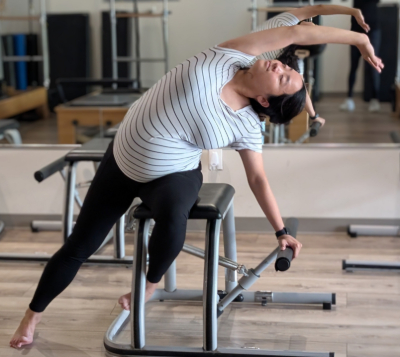
How Fascial Pilates Can Support Pregnancy, Labor, Delivery, and Postpartum Recovery
Pregnancy is one of the most transformative experiences the body can go through. As your baby grows, your posture changes, your breathing shifts, your pelvis adapts, and your connective tissue begins preparing for birth.
At Performance Pilates and Fascia in Sugar Land, we approach prenatal Pilates differently. We focus not only on strength, but also on fascia, breath, mobility, and whole-body support to help women move more comfortably during pregnancy and recover more effectively afterward.
When movement is done correctly during pregnancy, it can help improve posture, reduce discomfort, support pushing during labor, and assist with postpartum healing.
Why Fascia Matters During Pregnancy
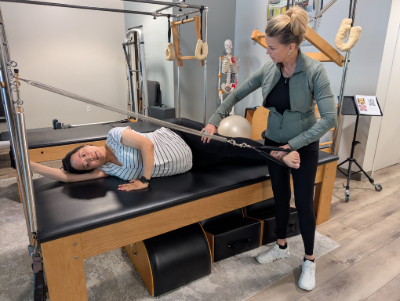
Fascia is the connective tissue system that wraps around and connects every muscle, organ, and joint in the body. According to the work of Thomas Myers and Anatomy Trains concepts, the body functions through interconnected fascial lines rather than isolated muscles.
During pregnancy, hormonal changes, especially relaxin, cause connective tissue to soften and become more adaptable in preparation for delivery. While this is necessary, it can also lead to instability, tension, compression, and discomfort if the body is not moving well.
This is why many pregnant women experience:
- Lower back pain
- Hip tightness
- Pelvic pressure
- Rib discomfort
- Neck and shoulder tension
- Difficulty breathing deeply
- Sciatica-like symptoms
- Feelings of heaviness or compression
At Performance Pilates and Fascia in Sugar Land, we use Pilates and fascial movement techniques to help hydrate and support the connective tissue system while improving movement efficiency throughout pregnancy.
How Prenatal Pilates Supports the Pregnant Body
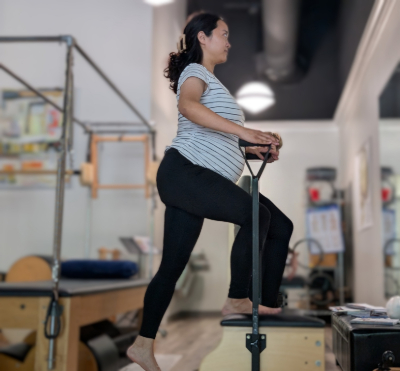
Traditional fitness often focuses on force, tightening, or “working harder.” Fascial Pilates focuses on distribution, decompression, breath, and coordinated movement.
Prenatal Pilates can help:
- Improve posture during pregnancy
- Support pelvic stability
- Reduce lower back tension
- Improve breathing mechanics
- Enhance pelvic floor awareness
- Increase mobility safely
- Reduce compression in the spine and hips
- Improve circulation and fascial hydration
- Create more ease in daily movement
Pilates teaches the body how to support itself without unnecessary gripping or tension. This becomes especially important as the body’s center of gravity changes throughout pregnancy.
Pilates, Pelvic Floor Health, and Pushing During Labor
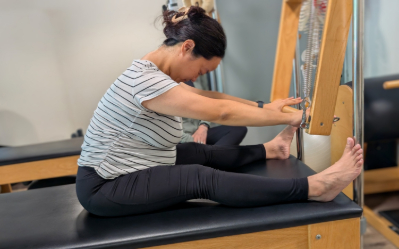
Many women are told to “strengthen the pelvic floor,” but the pelvic floor also needs elasticity, responsiveness, and the ability to release.
Healthy pushing during labor is not just about force—it is about:
- Breath coordination
- Pelvic mobility
- Nervous system regulation
- Fascial elasticity
- Reducing excessive tension patterns
At Performance Pilates and Fascia, we teach pregnant clients how to:
- Breathe more efficiently
- Reduce unnecessary gripping
- Improve pelvic awareness
- Create better movement through the hips and rib cage
- Support functional core responsiveness
This can help women feel more connected to their bodies during labor and delivery.
Movement During Pregnancy Can Improve Recovery After Birth
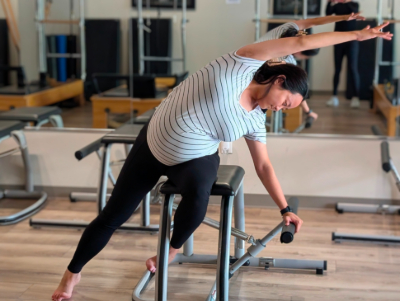
Postpartum recovery is about much more than “getting back in shape.” Pregnancy and birth affect the entire fascial and core system.
After delivery, many women experience:
- Core weakness
- Diastasis recti
- Pelvic floor dysfunction
- Rib flare
- Back pain
- Neck and shoulder tension from feeding and carrying the baby
- Feelings of instability or disconnection
Gentle Pilates and fascial movement can help restore:
- Breathing mechanics
- Core coordination
- Pelvic alignment
- Fascial hydration
- Whole-body movement patterns
At Performance Pilates and Fascia in Sugar Land, postpartum Pilates sessions are individualized to support healing safely and progressively.
You Do Not Need Pilates Experience to Begin
Many women assume they need to already be fit or flexible before trying prenatal Pilates. That is not true.
Our studio works with women at many different stages:
- First-time pregnancies
- Active pregnancies
- High discomfort pregnancies
- Postpartum recovery
- Women returning to exercise after birth
Sessions are personalized and adapted to your body, trimester, and movement experience.
Prenatal Pilates in Sugar Land, Texas
If you are looking for prenatal Pilates in Sugar Land, fascial movement training, or postpartum Pilates support, Performance Pilates and Fascia offers personalized Pilates sessions designed to help women move better during pregnancy and recover more effectively afterward.
Our approach combines:
- Pilates
- Fascial movement principles
- Breathwork
- Anatomy Trains concepts
- Whole-body movement education
We believe pregnancy should be supported through intelligent movement, not fear, tension, or excessive strain.