
Tensegrity, Fascia, and Pilates: Why Your Body WorksBetter When Everything Is Connected
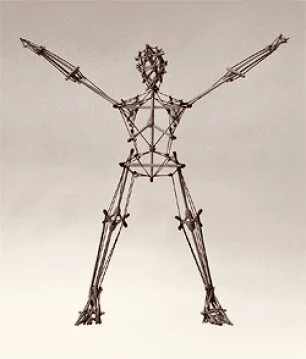
If you’ve ever left a Pilates session feeling taller, lighter, and more connected in your body,
you’ve experienced something deeper than just muscle work. What you’re feeling is tensegrity
in action.
Modern fascia research and the work of Thomas Myers have helped us understand the body in
a new way. Instead of thinking about muscles working in isolation, we now recognize that the
body functions as a continuous fascial network that distributes force throughout the entire
system.
Pilates, when taught with a fascial perspective, becomes one of the most powerful ways to
restore balance, elasticity, and efficiency in this system.
What Is Tensegrity?
The concept of tensegrity was originally developed by architect and systems thinker
Buckminster Fuller. The word combines tension and integrity.
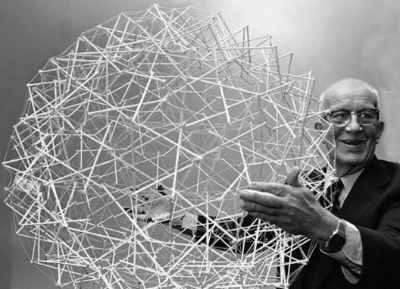
In a tensegrity structure:
● Compression elements (like rods) do not touch each other.
● They are suspended within a continuous tension network (like cables).
● The structure stabilizes itself through balanced tension throughout the system.
The human body works in a very similar way.
Our bones act as compression struts, while the fascia, muscles, ligaments, and tendons
create a continuous tension web that holds everything together. This concept applied to the human body is called biotensegrity.
Instead of stacking bones like blocks, the body is suspended within a fascial web that distributes forces everywhere at once.
The Fascial System: Your Body’s Internal Web
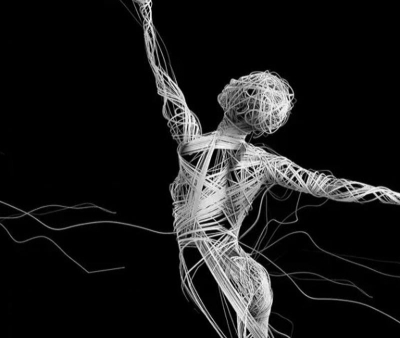
Fascia is the connective tissue that surrounds and connects:
● muscles
● bones
● organs
● nerves
● blood vessels
Anatomist Thomas Myers, in his research and dissections, demonstrated that fascia organizes the body into interconnected myofascial lines.
These fascial pathways transmit force across the body and coordinate movement patterns.
Superficial Front Line
Supports the front of the body and helps maintain posture and core support.
Superficial Back Line
Runs along the back body and plays a major role in standing, walking, and extension.
Lateral Lines
Help stabilize the body from side to side and maintain balance.
Spiral Line
Creates rotational movement and helps the body coordinate twisting actions.
Deep Front Line
Provides core stability and supports breathing, posture, and deep structural balance.
Together, these lines allow the body to distribute load and movement across the entire system instead of isolating stress in a single muscle or joint.
When this system is balanced, the body feels light, efficient, and coordinated.
When tension becomes stuck in one area, the distribution stops and we begin to experience
tightness, compression, and pain.
Pilates: A Perfect System for Restoring Tensegrity
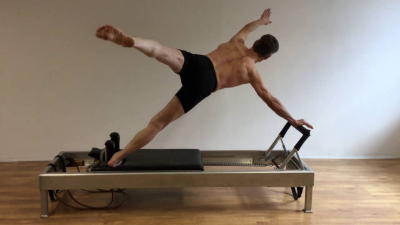
Joseph Pilates may not have used the word tensegrity, but his work clearly reflects its
principles.
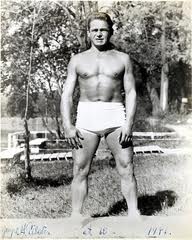
Pilates exercises emphasize:
● Length and decompression
● Balanced muscular engagement
● Three-dimensional movement
● Whole-body coordination
● Efficient force distribution
Rather than isolating muscles, Pilates teaches the body to move as an integrated system.
On the reformer, springs provide elastic resistance, which mirrors the elastic qualities of fascia.
This encourages the body to develop dynamic stability rather than rigid bracing.
Instead of gripping muscles to create stability, Pilates teaches the body to organize itself through
balanced tension across the fascial network.
This is tensegrity in motion.
Why Fascial Pilates Feels Different
When Pilates is taught with an understanding of fascia and tensegrity, the focus shifts from
muscle contraction to force distribution.
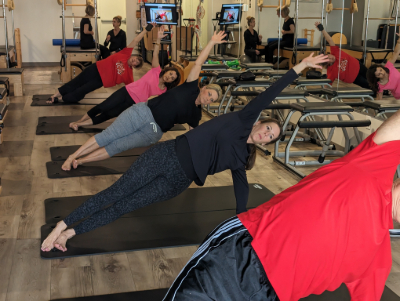
Students often notice:
● Less joint compression
● More fluid movement
● Increased range of motion
● A feeling of lightness or lift
● Better posture without effort
This happens because the body begins to share load across the entire fascial system, rather
than overworking individual muscles. In other words, the body becomes more efficient.
Stability Without Tension
One of the most powerful ideas in both Pilates and tensegrity is this:
True stability does not come from gripping. It comes from balanced tension.
When the fascial system is organized well:
● The spine decompresses
● The joints move more freely
● The body feels supported rather than strained
This is the kind of stability that allows us to move with strength, grace, and resilience.
In Conclusion:
Your body is not a collection of separate muscles and joints. It is a living tensegrity structure,
held together by a continuous fascial web. Pilates is one of the most effective movement systems for restoring balance in this network. When practiced with a fascial perspective, Pilates helps the body:
● distribute forces more efficiently
● reduce unnecessary tension
● improve movement coordination
● create space and lift throughout the body
The result is movement that feels lighter, stronger, and more connected.
Exactly the way the body was designed to work.
Feel the Difference Pilates Can Make
When the body’s fascial system is balanced, movement becomes lighter, stronger, and more efficient.
Pilates is one of the most effective ways to restore this balance and support long-term mobility and strength.
👉 Schedule a Move Smarter Intro today and experience the benefits for yourself.
Or call us: 281-937-7761