
How to Master the Pilates Roll Up. The Fascial Movement Way
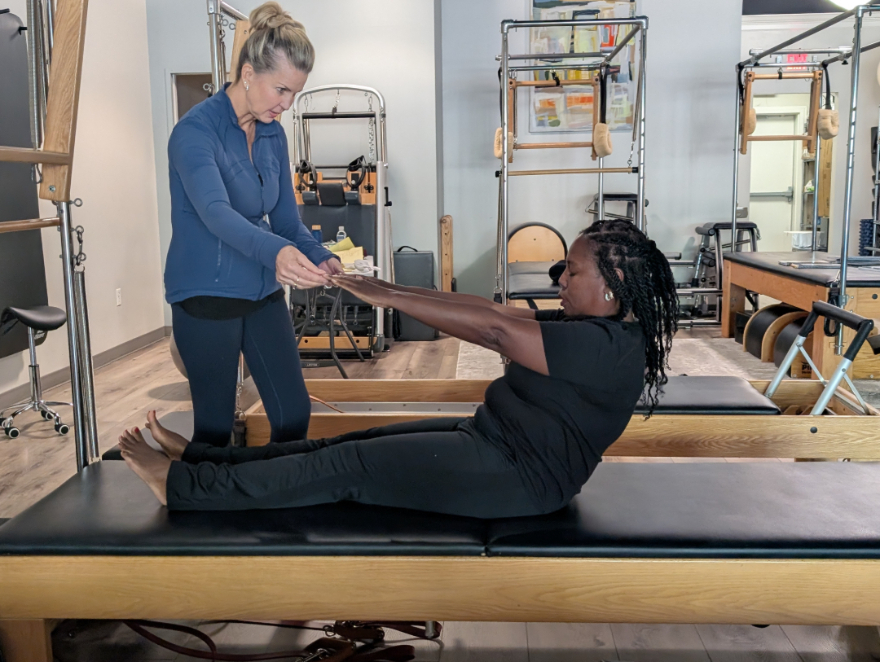
If you’ve ever tried a Pilates Roll Up and thought, “Why is this so hard?” You’re not alone!
This classic Pilates move looks simple, but for it to actually feel simple, you’ve got to tap into your fascial system. That’s where your real connection, mobility, and control come from.
Here’s the secret: it’s not just about core strength. It’s about awareness, finding a deeper mind-body connection that makes movement feel effortless instead of forced.
When you approach the Roll Up through fascial movement, you’ll start to notice how your whole body works together. You’ll move with ease, feel more supported, and build lasting strength and flexibility…especially important if you’re in your 40s, 50s, or 60s and want to stay active without strain.
1. Think Beyond Core Strength. Build Whole-Body Connection
The Pilates Roll Up is often thought to be all about the abs. But in fascial movement, we think bigger.
Before you even start, reach your arms overhead and imagine a long elastic band connecting your fingertips to your heels. As you roll up, let your arms lift your head, your head lead your spine, and your body follows as the elastic stretch recoils.
When you move this way, your abs don’t have to force the motion, they naturally turn on as part of the whole system working together.
2. Focus on Connection, Not Force
So many people try to muscle their way through the Roll Up and that’s exactly what makes it harder. When you force it, you build tension in the neck, shoulders, and back.
In fascial movement, we take a different approach. Rather than making muscles engage, we focus on connecting to the fascia so your muscles activate when they need to.
When you move this way, you’ll notice something surprising. The Roll Up actually feels lighter. You’ll feel open, stretchy, and supported instead of tight or strained.
Move slowly, breathe fully, and let your fascia do the work. Think of it like warm honey… smooth, elastic, and supportive.
3. Find the Stretch & Recoil
Try this: Before each Roll Up, reach your arms overhead and feel the stretch from your palms to your pelvis. Then stretch your legs long and feel that connection from ribs to feet. As your arms lift your head and shoulders, let your legs press into the floor. That gentle push creates an elastic recoil of the psoas muscle that helps lift your torso effortlessly.
4. Rolling Down
Now for the way back down. Instead of “lowering yourself, think “melt”. Let your pelvis lead you back as your arms reach forward. Imagine laying into a hammock soft, supported, and effortless. Gravity helps you melt into the mat, and then your fascia recoils to bring you back up again.
This wave-like motion keeps your spine supple and reduces stiffness something we all want as we move into our 40s and beyond.
“If your spine is stiff at 30, you are old. If it is completely flexible at 60, you are young.”— Joseph Pilates,
5. Move with Breath, Flow, and Awareness
Your breath is what ties it all together.
Inhale: Lengthen through your spine and prepare.
Exhale: Let your fascia recoil and gently roll you up.
When you sync your breath with movement, everything becomes smoother, more mindful, and more restorative. You’ll feel connected, calm, and energized all at once.
In Conclusion…
Mastering the Pilates Roll Up the fascial way helps you move with more grace, strength, and ease and a lot less strain.
When your fascia, breath, and alignment work together, you’ll notice better posture, flexibility, and energy whether you’re in class, walking, or just living your active life.
Ready to Feel the Difference?
If you’re ready to move better, feel lighter, and build strength without the struggle, this is for you!
Schedule your 90 minute, 1:1 Fascial Movement Consultation and learn how to enhance your Pilates practice (and everyday movement) with less effort and more flow.
📞 Call us today to book your session and start moving pain free with less effort, more confidence, connection, and control.
Performance Pilates in Sugar Land Town Square: 281-937-7761