
Fascial Movement & Weightlifting: The Rock in the Pond Effect
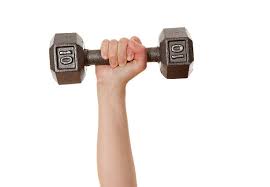
Pilates strengthens and tones the entire body, but muscle strength alone isn’t enough. For women in particular, weight-bearing exercise plays a critical role in preserving bone density and reducing the risk of osteoporosis. That’s why we integrate Pilates with weight lifting in our classes and private sessions.
Most people think of weightlifting as “chest day,” “leg day,” or “back and biceps.”
But your body doesn’t function in isolated parts. At Performance Pilates in Sugar Land, our Weights Class blends intentional strength training with foundational Pilates movement, keeping you lengthened, aligned, and decompressed. We integrate Pilates and fascial, whole-body movement principles into strength training, and into everything you do outside the studio. When you understand fascial movement and your own bio-tensegrity, something powerful clicks:
Every time you lift a weight… a laundry basket, groceries, a child, or your pet… your entire body responds.That’s how real strength works.
The Fascial Web: One Continuous System
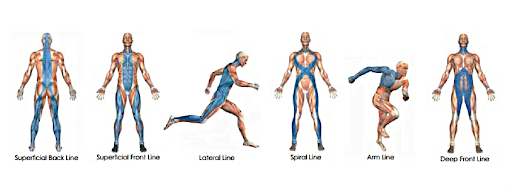
Fascia is the connective tissue that wraps around and weaves through every muscle, bone, nerve, and organ in your body. It’s one interconnected network.
Think of it like a spider web. Pull one strand…The entire web shifts. That’s why when you press overhead, your feet and legs lengthen into the floor. Or, when you curl a dumbbell, your core organizes around the load. When you pick up a weight, the load doesn’t stay in your hands. It travels through your fascial network, reorganizing your entire structure around it. Stability is not local. It’s global.
The Rock in the Pond Effect

Think of it this way…When you drop a rock into a pond, ripples move outward in every direction. The rock is the weight. The water is your body. Even if the rock lands in one place, the entire surface responds.That’s what happens when you lift.
Try this: Holding a dumbbell in each hand, let your arms swing by your side. As the arms swing back and forth, feel what muscles are responding to the weight as the arms are moving. Add a Bicep Curl, Tricep Press, Squat, etc. Try not to brace and hold yourself perfectly still. Feel which muscles naturally activate, beyond the specific muscle called upon in the exercise. Notice how the whole system reorganizes around the load.
How Pilates Improves Strength Training
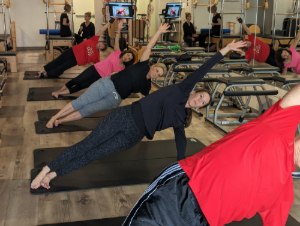
Pilates helps you feel the pond, and refines your ability to:
- Release unnecessary tension
- Maintain structure without rigidity
- Allow force to distribute instead of getting stuck
Without that awareness, many weight lifters over-brace and block the ripple. With it, the body responds like water.
Tension vs. Fluid Strength
When fascia is overly braced:
- Force becomes compressive
- Movement gets restricted
- Compensation increases
When tension is organized:
- Force transfers smoothly
- Energy moves efficiently
- You can lift more with less effort.
- Pilates trains organization. Weights challenge it.
Combining Pilates and Weightlifting: Train the Whole System
The future of intelligent strength training isn’t about isolating harder. It’s about integrating better.
- Every lift involves the whole body
- Tension distributes system-wide
- Stability emerges from bio-tensegrity
- The body responds like water to a rock
Instead of activating the muscles, you allow the muscles that are needed to activate. This cultivates movement integrity. Pilates sharpens your awareness of the ripple. Weightlifting deepens it.
If you’re over 40 and want to feel strong, stable, and confident in your body, Pilates can be the foundation that makes weight lifting feel safe, and not intimidating.
Book a session and experience what connected strength feels like.