
5 Simple Physical Tests That May Predict How Long You’ll Live
What your strength, balance, and mobility reveal about healthy aging—and what you can do to improve them.
What if some of the best indicators of how well you’re aging have nothing to do with your weight, blood pressure, or how many miles you can run?
Research suggests that a few surprisingly simple physical movements can reveal important information about your overall health and longevity.
We’re talking about everyday abilities like getting up from the floor, standing on one leg, gripping an object, and walking at a comfortable pace.
These movements may seem insignificant, but they tell us quite a bit about how well your body is functioning as a whole.
At Performance Pilates in Sugar Land, Texas, we believe that how well you move today plays an important role in how well you’ll live tomorrow.
Let’s look at four physical tests that researchers have linked to longevity.
1. Can You Get Up From the Floor Without Using Your Hands?
This is called the Sitting-Rising Test, and it’s one of the more fascinating measures of physical function.
Try it: From a standing position, lower yourself to the floor and return to standing, using as little support from your hands, knees, or other body parts as possible.
Researchers score the movement based on how much assistance you need and how smoothly you perform it.
A study published in the European Journal of Preventive Cardiology followed more than 4,200 adults and found that those who performed poorly on this test had significantly higher mortality rates during the follow-up period.
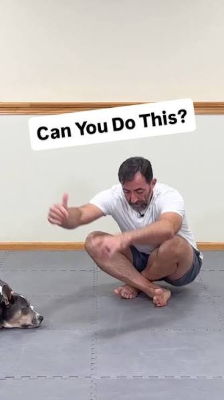
Why? Because getting down to the floor and back up requires several systems to work together: strength, balance, mobility, coordination, and flexibility.
The Pilates connection: In Classical Pilates, we develop these qualities through movements that challenge the entire body. Our fascial movement approach emphasizes how forces travel through the body, allowing muscles and connective tissues to work together rather than relying on isolated areas to do all the work.
The goal isn’t simply to get stronger. It’s to develop the strength and coordination to move with greater ease.
2. Can You Balance on One Leg for 10 Seconds?
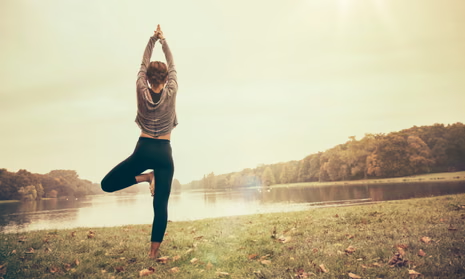
It sounds easy enough. But give it a try!
Try it: Stand near a sturdy counter or wall, lift one foot off the floor, and see whether you can maintain your balance for 10 seconds without holding on.
In a 2022 study published in the British Journal of Sports Medicine, researchers followed more than 1,700 adults between the ages of 51 and 75.
They found that participants who couldn’t maintain a 10-second single-leg stance had a significantly higher risk of death during the follow-up period, even after accounting for several other health factors.
Balance is much more than simply having strong legs.
It requires communication between your nervous system, sensory systems, muscles, joints, and connective tissues.
The Pilates connection: Balance improves when the body learns to organize itself more efficiently. Through our fascial approach to Classical Pilates, we work on postural organization, axial elongation, weight transfer, and coordinated movement.
Rather than simply teaching you to stand on one leg, we help you develop the movement strategies that make balance more natural and reliable.
3. How Strong Is Your Grip?

Your handshake might reveal more about your health than you think.
Try it: Grip strength is typically measured with a handheld dynamometer, a device that records how much force your hand can produce.
Although it measures strength in the hand and forearm, researchers often use grip strength as an indicator of overall muscular function.
A systematic review published in The British Medical Journal (BMJ) found that weaker grip strength was associated with a greater risk of mortality.
Why does this matter?
Maintaining muscle strength becomes increasingly important as we age. Strength supports our ability to carry groceries, lift luggage, open jars, participate in recreational activities, and remain independent.
The Pilates connection: Pilates isn’t just about abdominal strength or flexibility. Classical Pilates challenges the entire body, including the arms, shoulders, back, hips, and legs.
Our fascial movement approach helps the body distribute effort through interconnected muscular and fascial systems, creating strength that supports real-life activities.
After all, what good is strength if you can’t use it?
4. How Fast Do You Walk?
Walking speed may be one of the simplest indicators of overall physical function.
Try it: Walk a measured distance of about 13 feet (4 meters) at your normal, comfortable pace while someone times you. Walking speed is calculated by dividing the distance by the time.
A study published in Journal of the American Medical Association (JAMA) examined walking speed in more than 34,000 adults aged 65 and older and found that faster usual walking speeds were associated with longer survival.
Walking requires much more than moving your legs.
Your body must coordinate balance, strength, joint mobility, spinal movement, and the ability to transfer forces efficiently from one step to the next.
The Pilates Connection: Walking is a beautiful example of how our body’s fascial system contributes to movement through stretch and recoil.
Rather than thinking of walking as simply lifting one leg and putting it in front of the other, imagine your legs swinging naturally from your torso. As you move, muscles and connective tissues stretch, store elastic energy, and release it to help propel you forward.
In our fascial approach to Classical Pilates, we encourage this natural rhythm, helping the body move with greater coordination without unnecessary muscular effort.
The goal isn’t just to walk faster. It’s to walk with greater ease and efficiency.
5. Can You Stand Up From a Chair Five Times Without Using Your Hands?
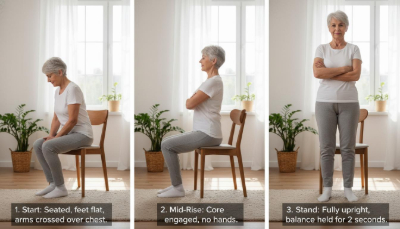
Something as simple as getting out of a chair can tell us quite a bit about how well we’re aging.
Try it: Sit in a sturdy chair with your arms crossed over your chest. Stand up completely, then sit back down. Repeat five times, timing how long it takes without using your hands for assistance.
A 2025 study published in the Brazilian Journal of Physical Therapy followed more than 43,000 adults aged 50 and older. Researchers found that people who took longer to complete five chair stands had a higher risk of mortality during the follow-up period. The relationship was especially notable among women.
Why? Because standing up from a chair requires lower-body strength, balance, joint mobility, and coordination. These are the same abilities that help us climb stairs, get out of a car, and move confidently throughout the day.
The Pilates Connection: In Classical Pilates, we develop strength through the legs and hips while coordinating movement through the feet, ankles, pelvis, and spine.
Our fascial movement approach emphasizes how the entire body distributes and manages forces, helping you develop strength that translates into everyday activities.
After all, maintaining independence as we age often comes down to the movements we take for granted today.
What Do These Five Tests Have in Common?
All five tests measure different aspects of something incredibly important: your ability to function independently.
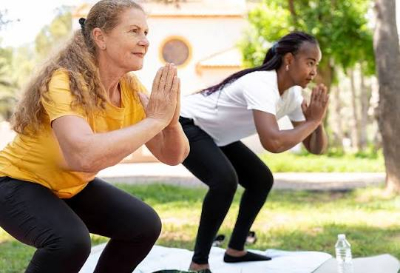
Strength without mobility can limit movement. Flexibility without stability may not provide the support you need. Balance without coordination can make everyday activities more challenging.
Your body needs all of these qualities working together.
And that’s exactly what we emphasize at Performance Pilates.
We teach Classical Pilates through a fascial movement approach, helping your body develop strength, flexibility, balance, and coordination as an integrated system.
Rather than focusing exclusively on individual muscles, we look at how the entire body organizes and distributes effort.
The result is movement that can become stronger, more efficient, and more adaptable.
The Best Part? You Can Work on These Skills at Any Age.
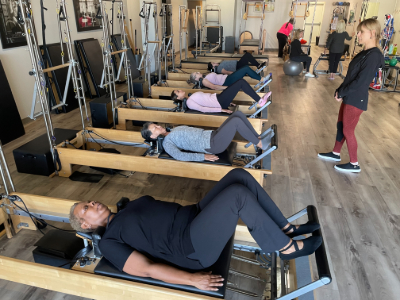
These tests aren’t a prediction of your personal expiration date. They’re indicators of physical function that researchers have associated with health outcomes across large populations.
And if you struggle with one or more of them, it means you’ve identified something worth working on.
Your strength can improve. Your balance can improve. Your mobility and coordination can improve.
The real goal isn’t simply to live longer. It’s to move well enough to enjoy the years ahead.
Whether that means traveling, playing with grandchildren, gardening, playing golf, hiking, or simply getting up and down from the floor comfortably, your ability to move matters.
Move Smarter. Feel Better. Live Better.
At Performance Pilates in Sugar Land, Texas, we help you build the strength, mobility, balance, and coordination to keep doing the things you love.
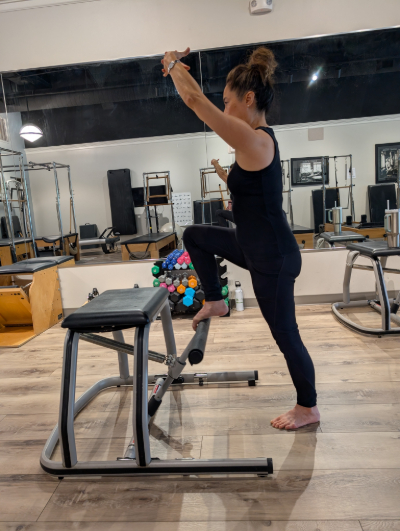
Get started with three private Pilates sessions in our Move Smarter Intro. We’ll get to know how your body moves, introduce you to our fascial movement approach, and help you find the best path forward.
Ready to see what your body is capable of?
Note: These tests are associated with longevity in population studies, but they cannot determine how long an individual will live. Physical limitations, injuries, and medical conditions can affect performance. If you have balance difficulties, joint problems, or a history of falls, seek appropriate professional guidance rather than attempting these tests without support.